Material and durability
We distinguish between furniture-grade wood for living rooms, heavy duty steel for high-anxiety pets, and soft-sided fabric for travel.
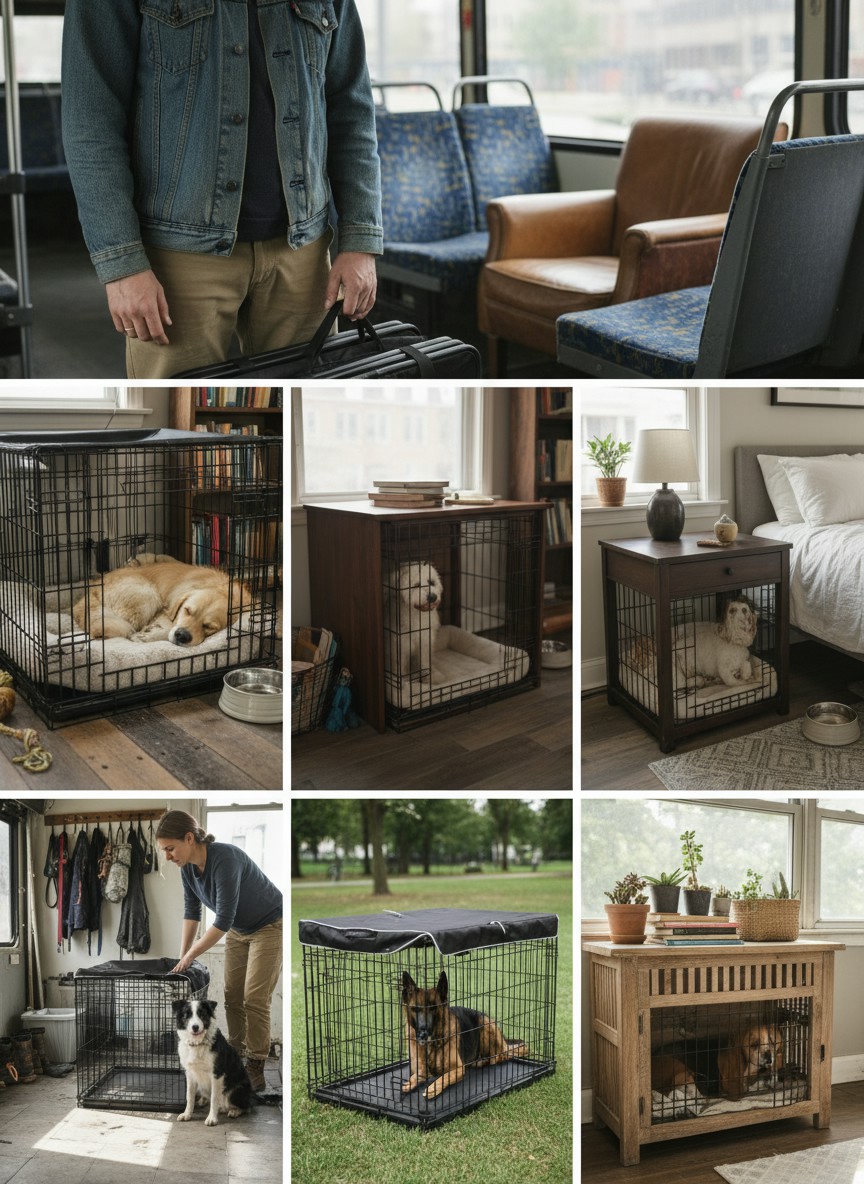
Selecting a crate involves more than just picking a size; it is about matching the enclosure to your dog's behavior and your home's layout.
We monitor to categorize crates by their structural material, intended environment, and specific breed dimensions.
We distinguish between furniture-grade wood for living rooms, heavy duty steel for high-anxiety pets, and soft-sided fabric for travel.
Our index tracks sizes from 18 in puppy starters to 54 in extra-large enclosures, including corner and end table configurations.
We catalog entry points ranging from single-door basics to 4-door models with sliding barn doors or lockable zippers.
Each dog crate gets one number out of ten. That number comes from what shoppers have said and what we've seen, not from a fixed checklist.
When a crate has a visible average rating, that number carries the most weight.
Any written feedback we kept on hand adds a small amount to the score.
More reviews nudge the mark up, very few pull it down, and crates that are often out of stock lose a little.
For permanent placement, furniture-style crates and end table models allow the kennel to blend with decor. These often feature wooden construction, sliding barn doors, or rustic finishes, serving as both a pet home and a tabletop.
If you frequently move the kennel, collapsible metal wire or soft-sided fabric crates offer the best utility. Many travel models feature lockable zippers, lightweight frames, and the ability to fold flat for car storage.
Stronger breeds or dogs with high anxiety may require heavy duty steel or escape proof designs. These crates prioritize reinforced frames and secure latches over aesthetics to ensure the pet remains safely contained.
Same niche, grouped so you can scan faster
Home-ready kennels designed for living spaces and bedrooms
Dual-purpose kennels that function as functional home furniture
Fold-flat designs for easy storage when not in use
Heavy-duty construction for dogs with significant size and strength
Crates designed to serve as bedside or sofa side tables
Furniture-grade wood enclosures that blend with home decor
Dual entry points for flexible placement in any room
Portable and lightweight designs for trips and vacations
Lightweight fabric and mesh crates for travel and comfort
Classic ventilated steel cages with high visibility and airflow
The lower-priced listings in this catalog
Sleek and professional dark finishes that hide wear